

Exploring Treia, Le Marche
Why this hilltop town deserves your time


Ciao, I’m Barbara Rocci and I create immersive experiences in Le Marche. I’m passionate about Italy, its culture, its history, its food and its language. I help you create authentic escapes, learn Italian and get a taste of the magic of Italian culture.
If learning to speak Italian spontaneously sounds like something you’d like to do, grab my free course here. Not into the language, but would love to discover my region? Here’s my exclusive guide : Discover Le Marche Region Unplugged

If you’re planning your summer holidays in Le Marche you already know how rich the region is. The problem is never how to make it interesting, but rather how to make choices that will give you the most amazing experience.
There are so many places to see, so many flavours to taste… and only so much time. Which towns are truly worth a stop? How do you make sure you don’t miss out on the real, authentic Italy?
Truth be told, most blogs will send you straight to the coast. “Spend your days in Monte Conero or Sirolo,” they’ll say.
But you’re not a typical traveller and this isn’t a typical blog.
Yes, the Adriatic offers deep, wide-open views, no argument there.
But what if you’re looking for is something slower, more grounded, and unforgettable?
The inland villages (borghi) rich in history, culture, and food are where your journey should begin.
And mine begins in Treia.
In this article, I’ll share why Treia deserves your attention, what makes it different, and how to make your visit truly memorable.
Where is Treia, exactly?
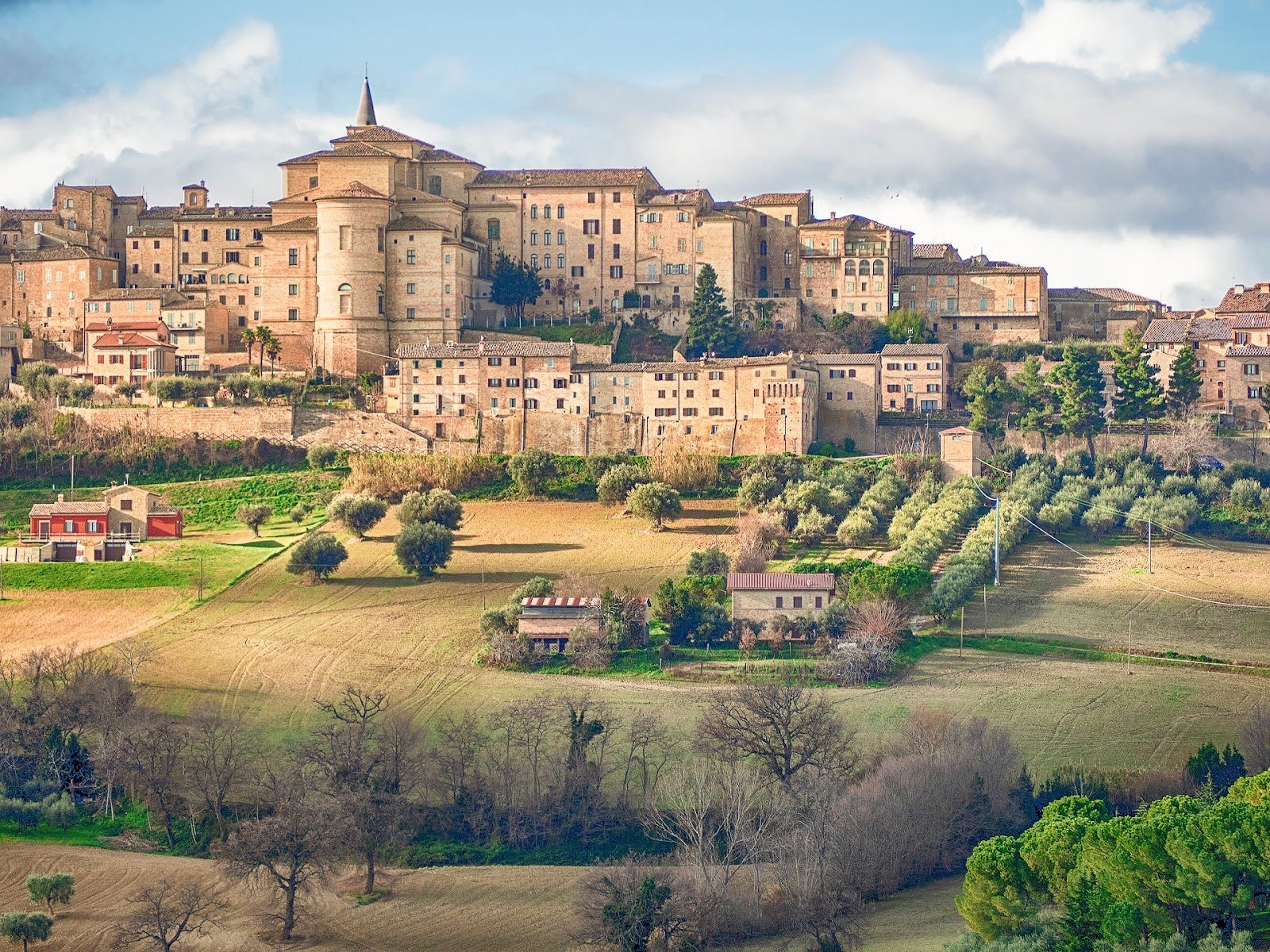
Treia is a historic hilltop town in the province of Macerata, tucked into the inland landscape of Italy’s Le Marche region.
Just 40 minutes from the Adriatic coast, it sits between the cultural hub of Macerata and my hometown, San Severino Marche.
From Treia, it’s easy to explore some of the region’s most beautiful spots, whether you’re heading to the Sibillini Mountains, the Frasassi Caves, the vineyards of Jesi, or the cultural charm of Macerata’s Sferisterio opera festival.
Treia is perfect for slow travel
At first glance, Treia might seem like the kind of place you pass through in an afternoon.
A few quiet streets, a central piazza, some pretty views… But in reality, that would be missing the point entirely.
Treia isn’t meant to be rushed.
It’s a town that reveals itself slowly… one corner, one conversation, one flavour at a time.
It’s perfect for travellers who want more than a photo.
It invites you to pause, walk without purpose, sit with a coffee, and actually notice where you are.
This is the heart of slow travel: giving yourself time to listen, to feel the rhythm of a place, and to let it leave a mark on you.
Treia does that beautifully.
You won’t find big attractions or tour buses here but that’s exactly where its magic lives.
The Treia I remember, and the one I’ve found again
I’ve been coming to Treia since I was a little girl. My father worked nearby at a local bank, and he seemed to know everyone.
Walking through town with him felt like walking with a local legend: every few steps, someone would stop us to say hello. As a curious little girl who loved history, that made Treia feel like a living museum, full of stories to discover.
Back then, I wasn’t just tagging along. I was looking. For old libraries, dusty archives, secret corners… anything that whispered of the past. And of course, the food was always the cherry on the cake.
Years later, after living abroad for a long time, I came back, and it was a different experience altogether.
I saw Treia with new eyes.
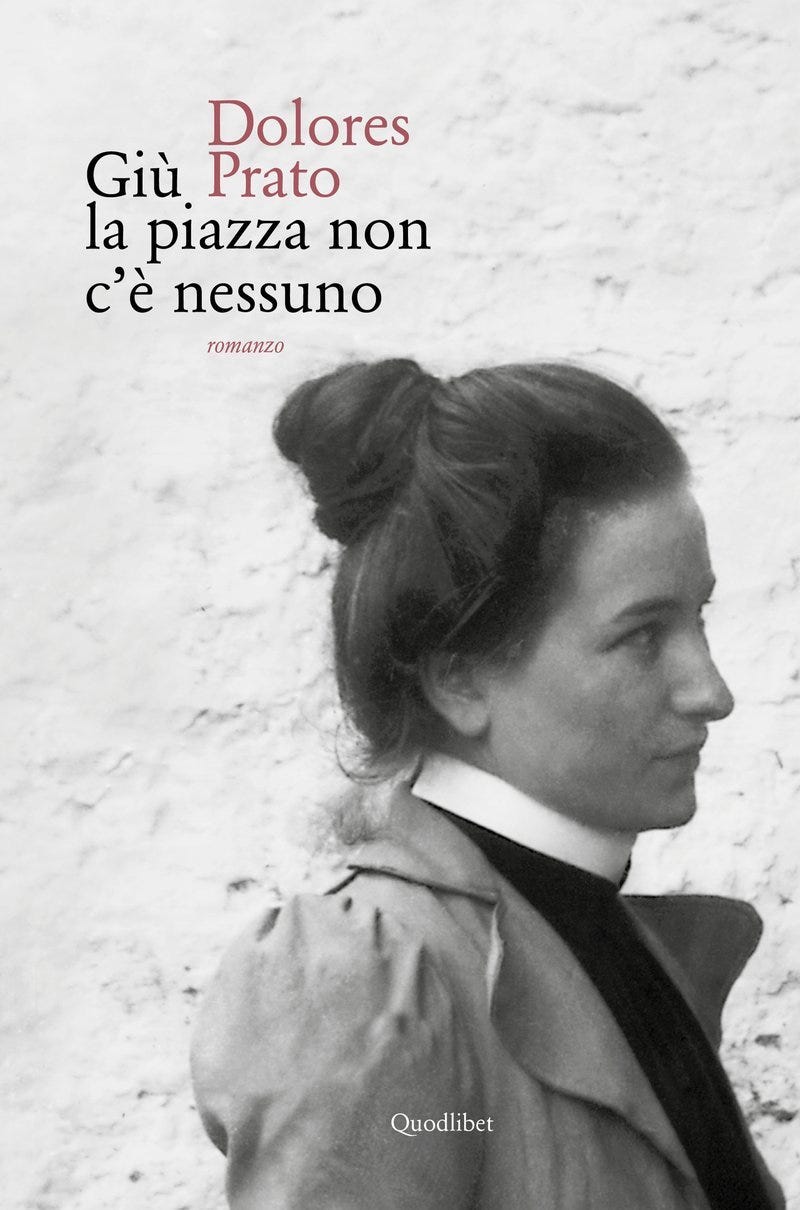
I discovered things I had never known as a child: like the life and words of Dolores Prato, whose book Giù la piazza non c’è nessuno left a deep mark on me.
I realised that Treia is one of those places that continues to open up the longer you stay. It gives and gives… and when it’s time to leave, there’s always a part of you that wishes you had just one more day.
Treia, step by step: what to visit, taste, and feel
Take a walk around town
Treia’s old town is built in a horseshoe shape, and walking its full curve is one of the best ways to feel its rhythm.
It’s not a large town, but it unfolds slowly.
Every corner holds a detail you might miss if you’re rushing: an old doorway marked with a date, a worn stone step, the silence of a narrow alley.
One of Treia’s unique features is its seven ancient gates, each once marking a passage into the fortified village.
You don’t need a map to find them: just follow the walls, and you’ll pass through them naturally as you explore.
Among them, Porta Vallesacco stands out.
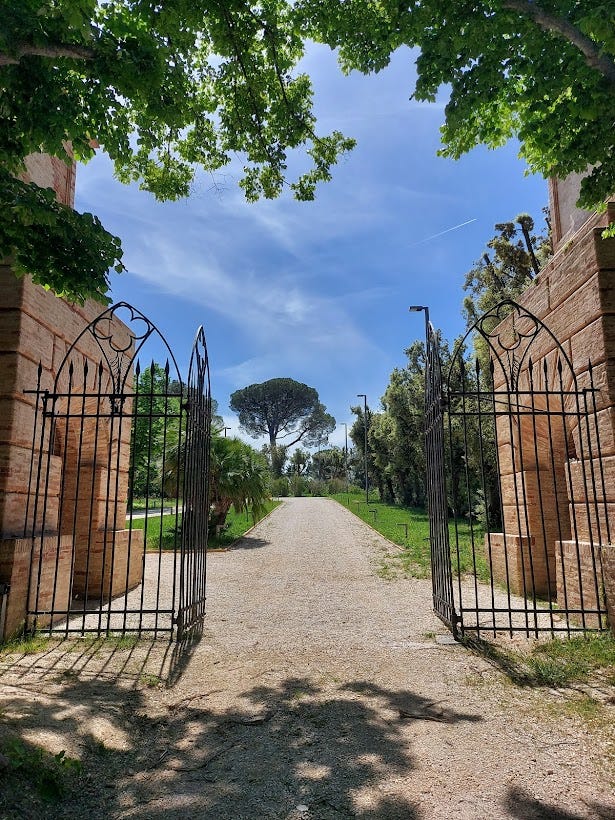
More than a pretty photo spot, this gate is a national monument, recognised for its role in a historic 13th-century battle between Guelphs and Ghibellines.
Standing there now, it’s hard to imagine the clashing swords and shields (today it’s all quiet views and warm stone) but that’s part of Treia’s depth: so much happened here, and yet it holds that history with remarkable stillness.
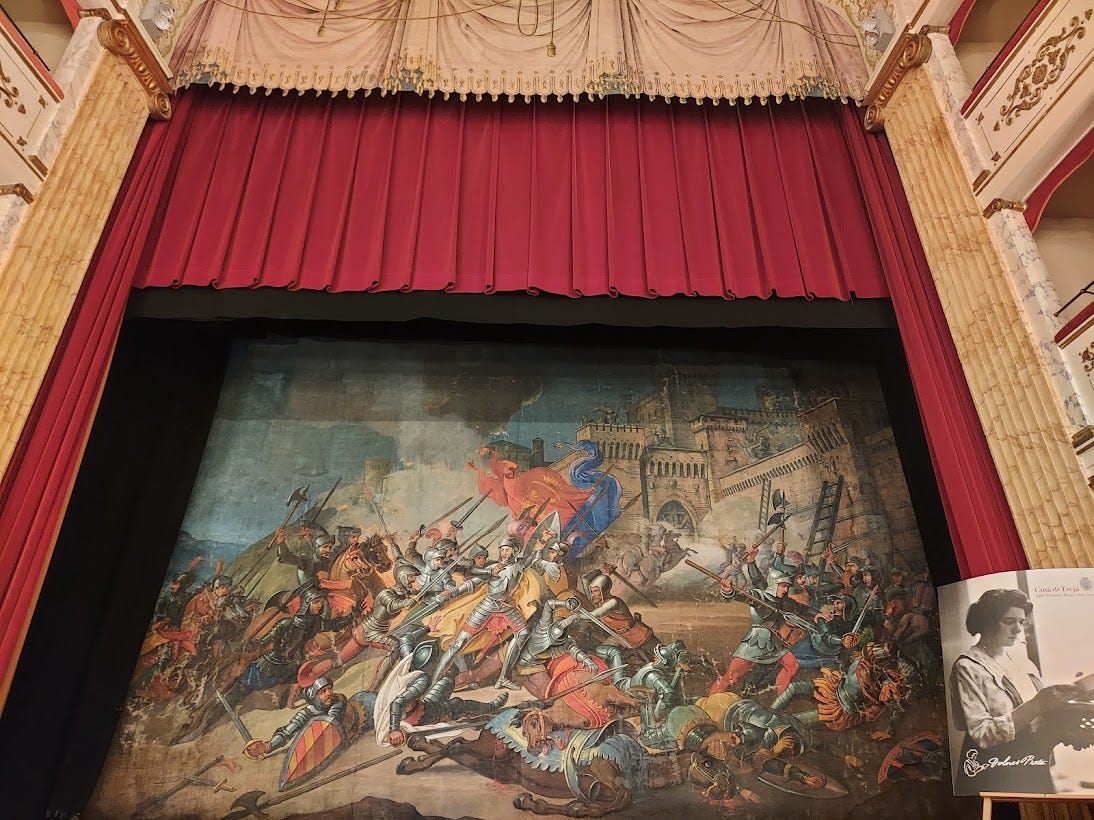
Insider’s tip: if you manage to visit the Treia theatre, you’ll find inside a curtain painted by Silveiro Copparoni that tells you the story of the legendary battle.
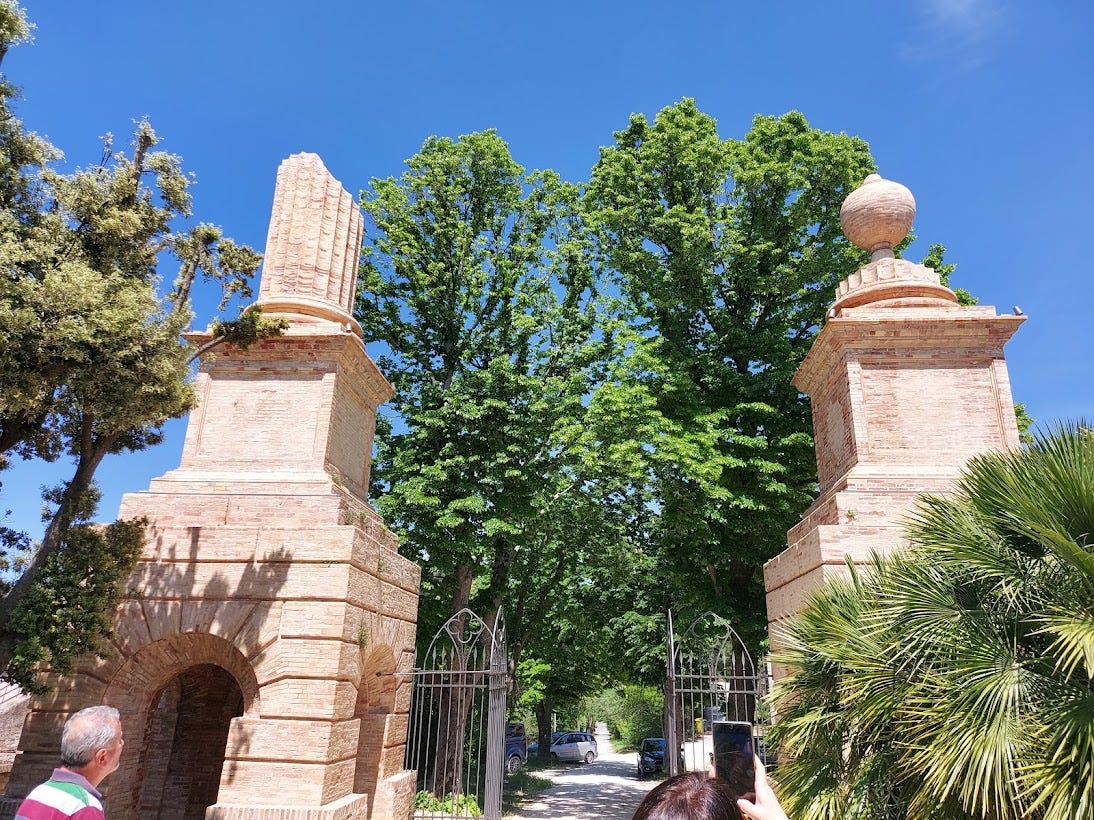
Don’t miss the panoramic viewpoints scattered along the path.
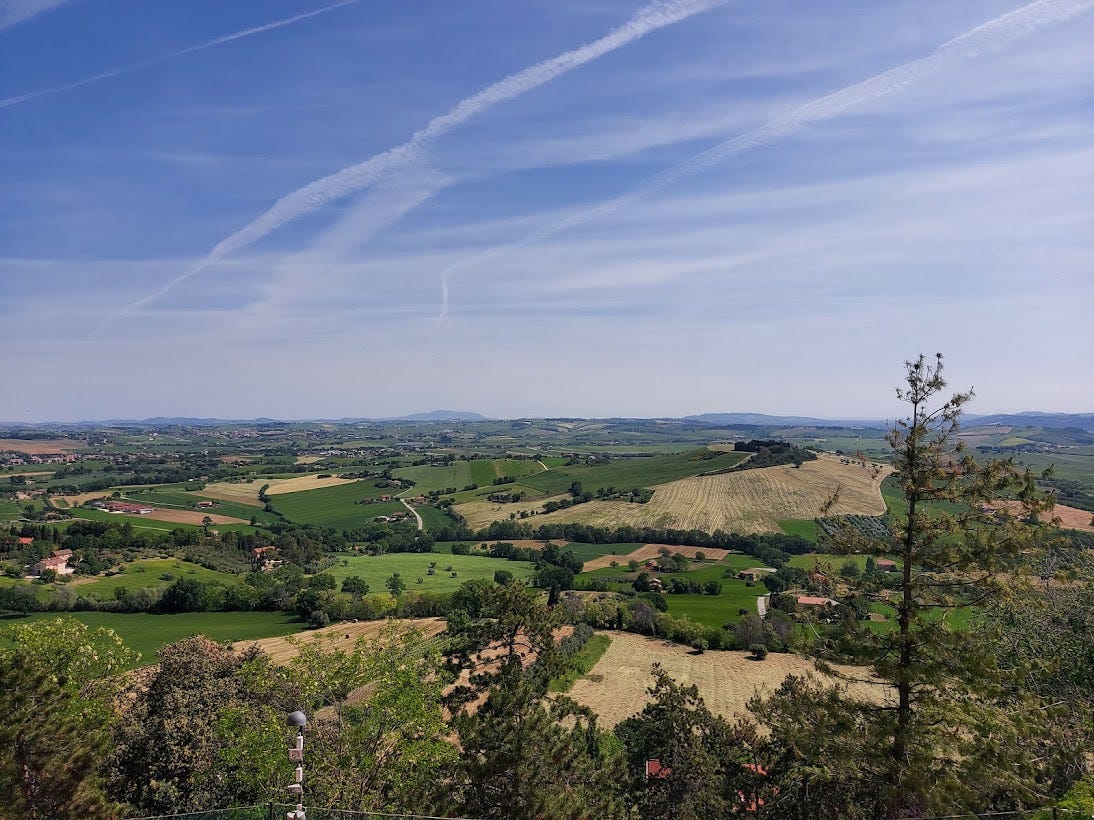
One of them is the Torre dell’Onglavina. This tower was in fact the bastion of the town back in the 12th century, and offers you a complete panorama of Le Marche. On a clear day, you can see all the way to the Adriatic Sea, with Monte Conero rising in the distance.
And of course, the sunset is priceless: the whole landscape glows. Valleys, vines, and scattered farmhouses lit in soft gold.
Taste the land
In Treia, certain flavours bring you back in time, even if you didn’t grow up visiting the town like I did.
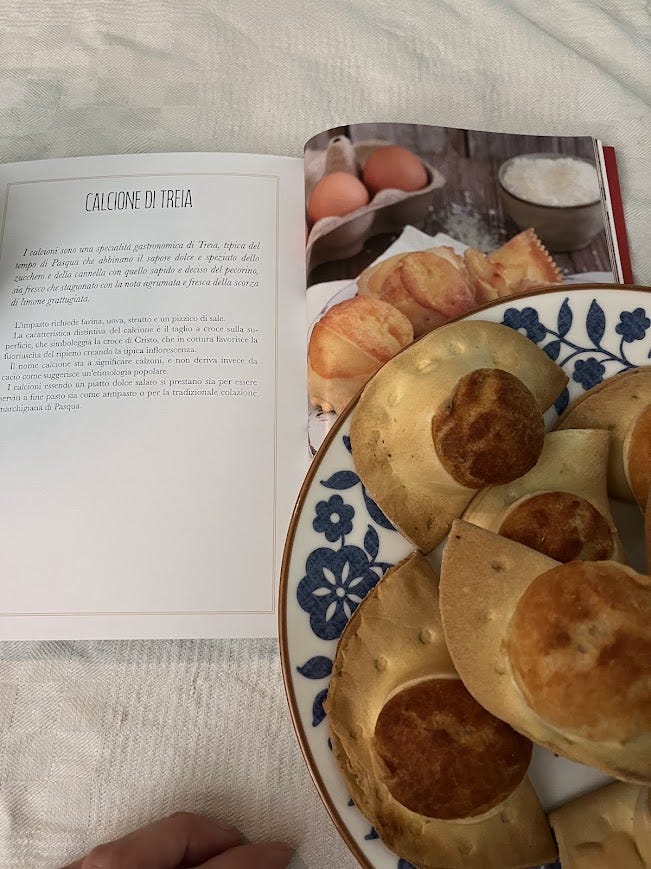
One of the most beloved local treats is the calcione: a baked pastry with the surprising contrast of a sweet-salty filling made from pecorino cheese and lemon zest. You’ll find them in bakeries across town, usually in the morning when they’re still warm.
And then there’s the cargiù.: these very large handmade ravioli filled with sheep’s ricotta and herbs. This was a childhood favourite of mine, and part of why I always looked forward to visiting Treia.
The name comes from the local dialect, and if you find a place that still makes them the old-fashioned way, don’t skip it (and let me know!)
Theatre and Ancient Games
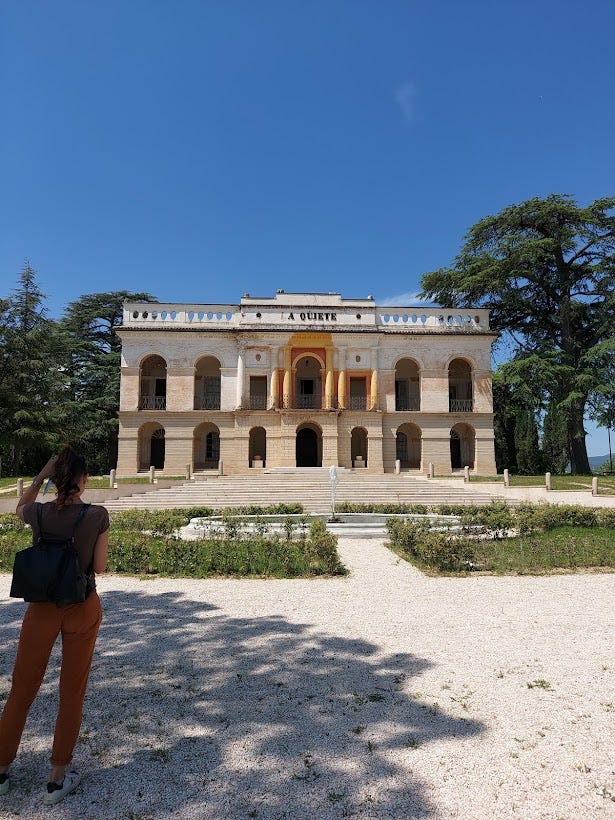
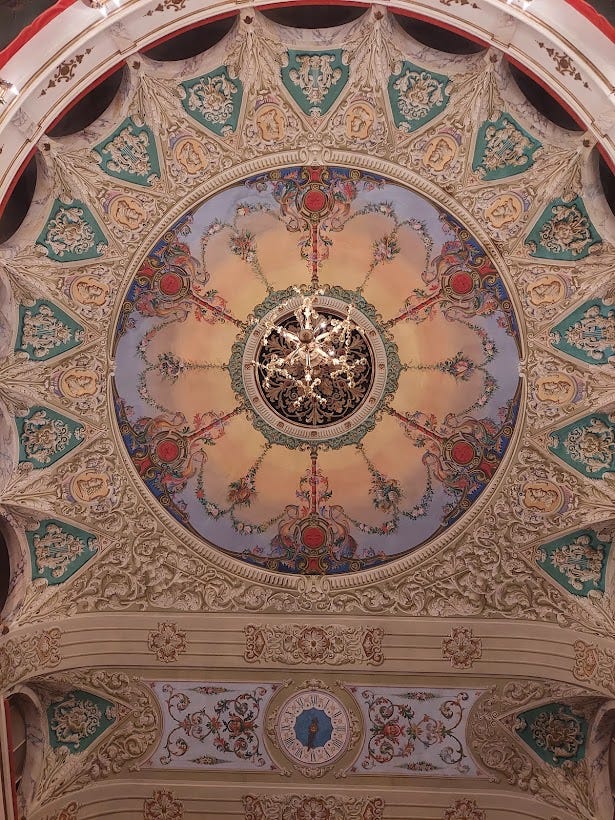
Tucked quietly into one of Treia’s side streets, the entrance to the Teatro Condominiale is discreet… but step inside, and you’re in another world.
It’s a small community theatre, intimate and lovingly kept, with velvet seats and soft golden light.
Designed by the architect Lucatelli in 1801, this neoclassic theatre preserved the beauty of time, with its rare wooden boxes and its painted curtains representing moments of Treia’s history.
The existence of this theatre was only made possible by the contribution of several local families who financed the project. Still today, it is a place of culture, community and traditions.
If you can, step in. It’s worth a look.
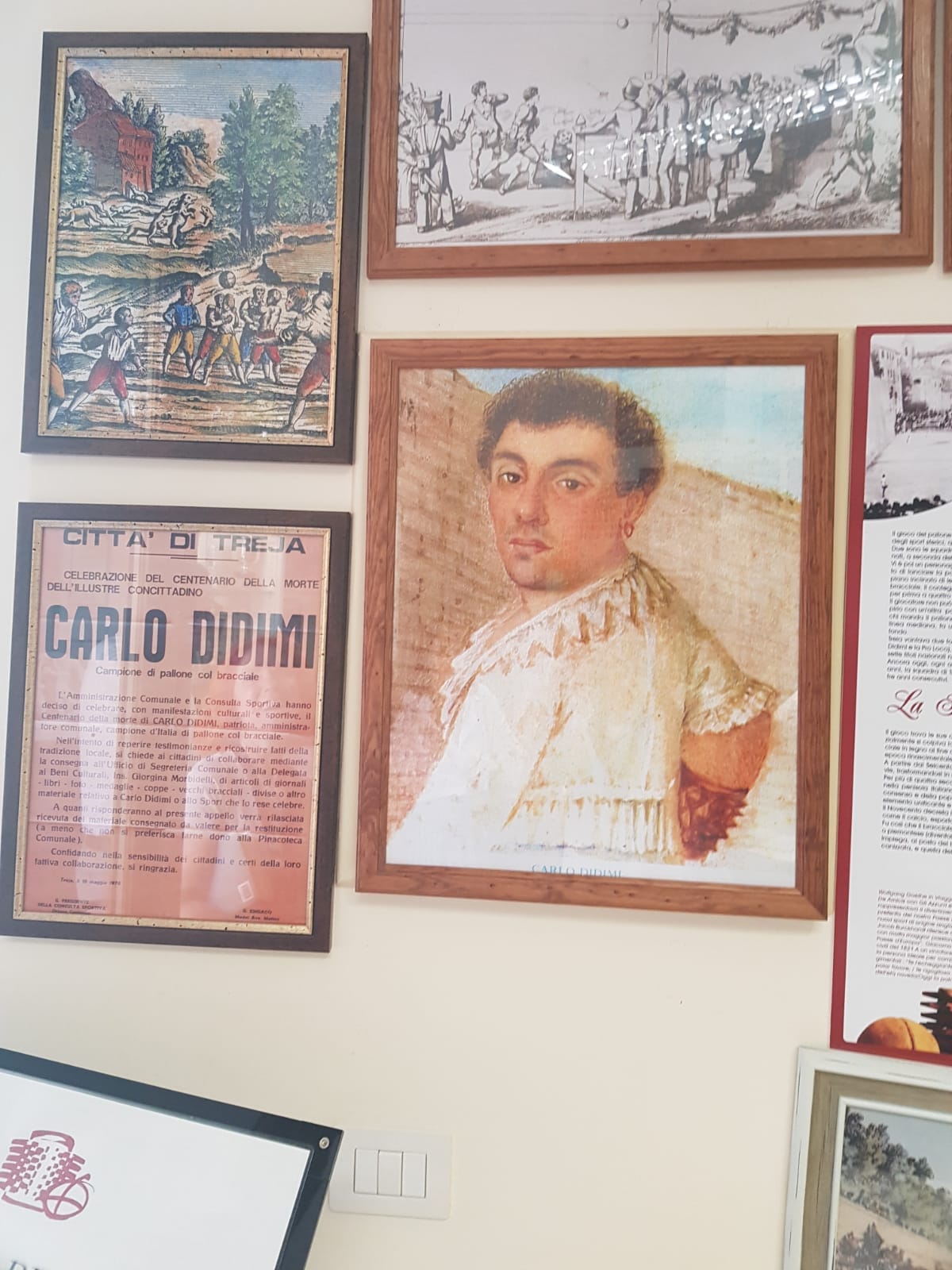
And then there’s the Gioco del Bracciale, Treia’s most unusual and historic tradition.
This game was once wildly popular across Italy in the 18th and 19th centuries. It’s played with a heavy wooden bracelet studded with spikes, used to strike a ball across a long walled court.
It’s dramatic, fast-paced, and slightly dangerous. In Treia, they’ve brought the tradition back to life with the annual Disfida del Bracciale that keeps the audience on the edge of their seat every August. Locals dress in historical costume and take over the town for a few days of matches, music, and celebration. It’s one of Italy’s most spectacular historical reenactment.
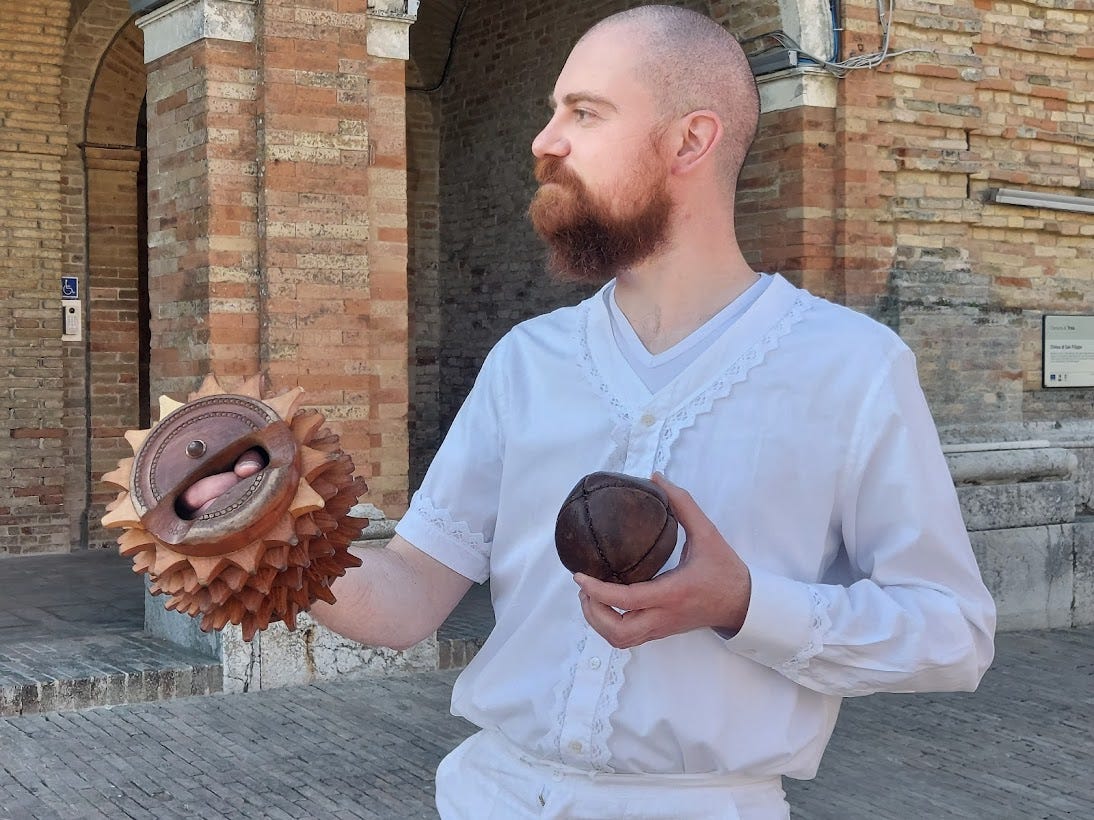
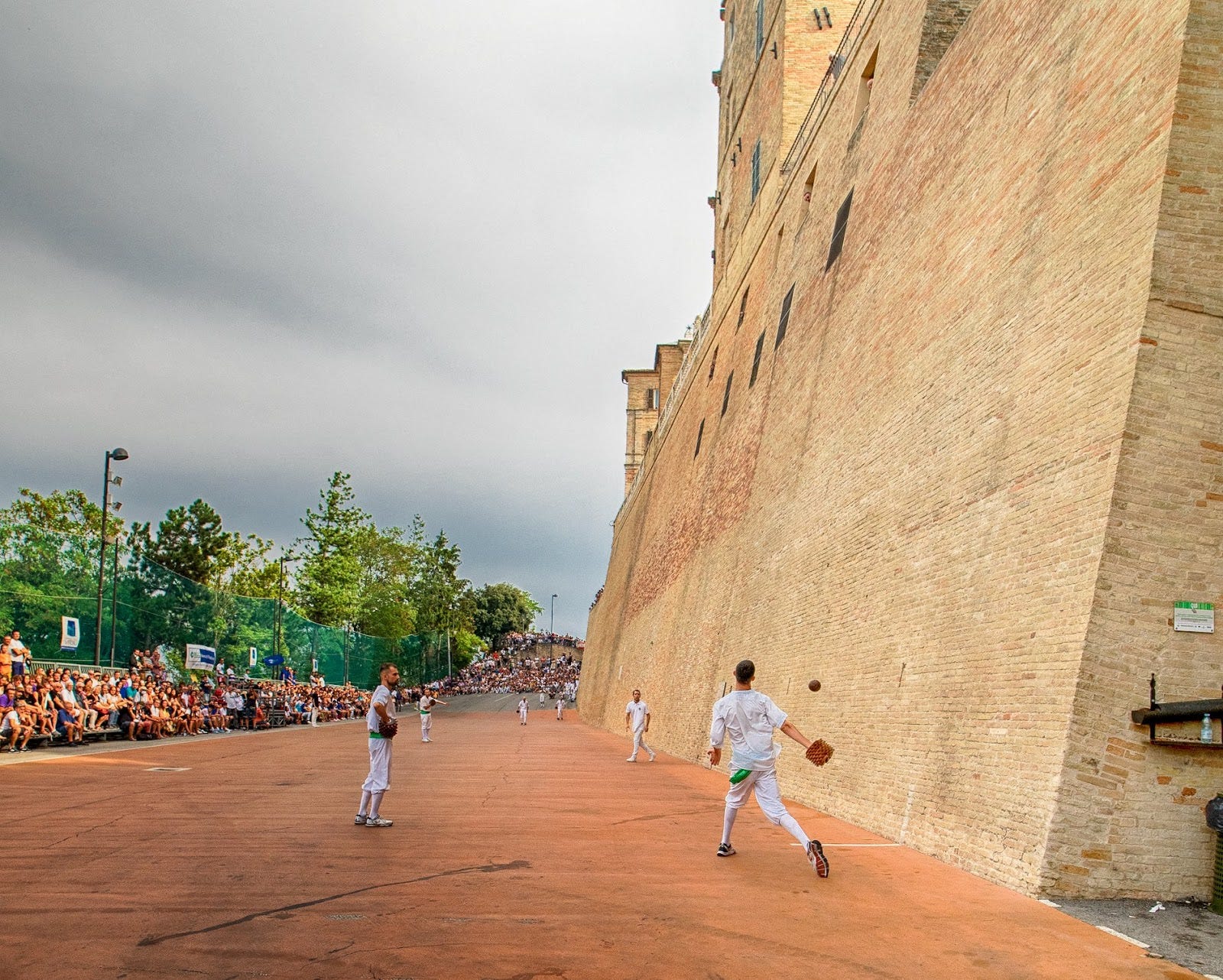
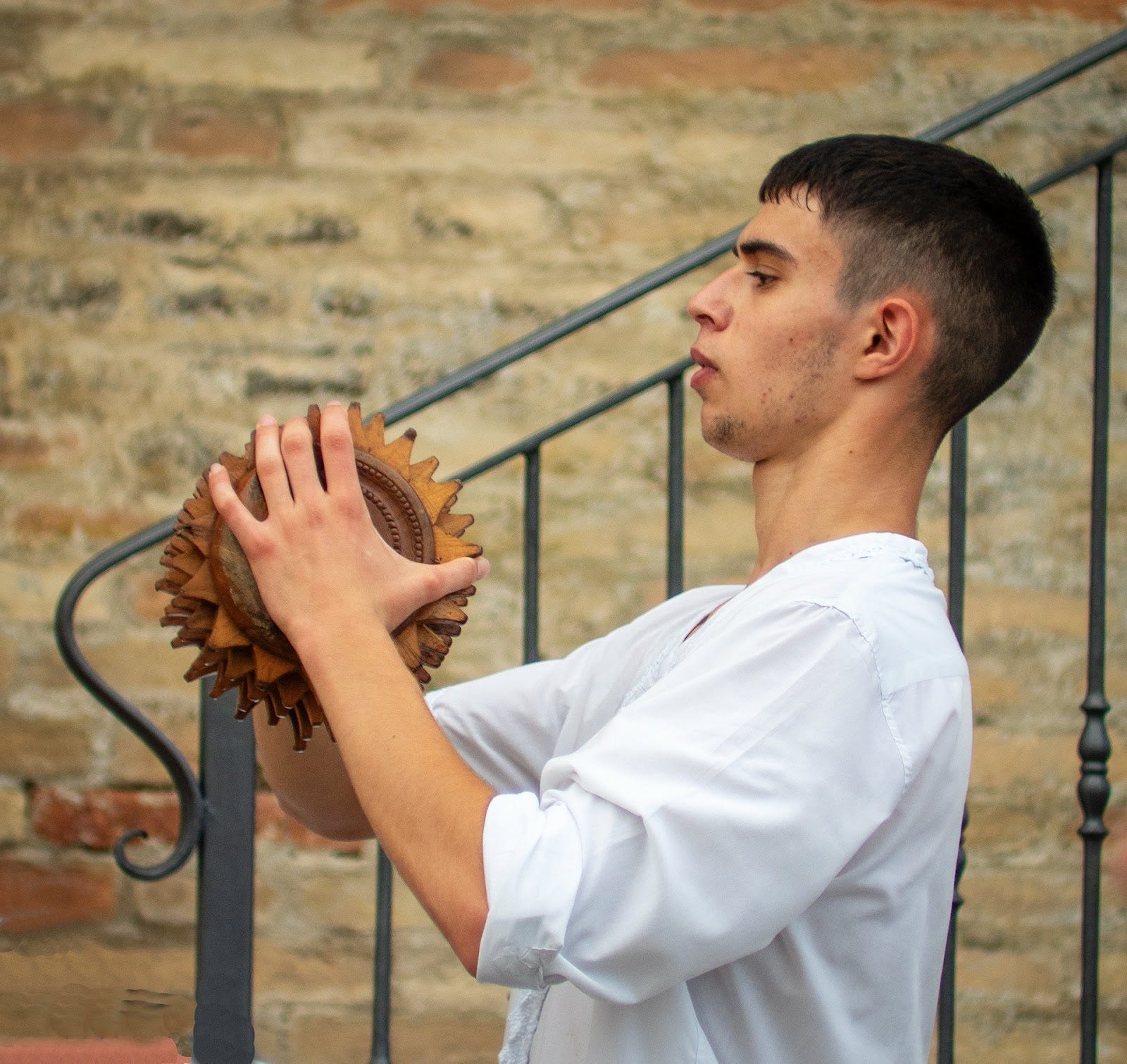
Even if you’re not here during the festival, you can still find traces of it.
Ask a local about Carlo Didimi, Treia’s legendary bracciale player, once mentioned by Giacomo Leopardi. Or stand in Piazza della Repubblica and imagine the sound of the ball echoing off the walls…
It’s one of those traditions that makes Treia feel alive — past and present overlapping in a way that few towns manage to hold.
“A Treia, tutto sembrava fermo, come se il tempo avesse smesso di contare.”
The soul of Treia and Dolores Prato
I only discovered Dolores Prato recently, long after I first started coming to Treia. But once I read her words, it felt as if I had always known her. Or perhaps, always walked past the places she once did, without realising.
Born in Rome but raised in Treia from 1892 to 1910, Dolores Prato wrote about the town with a kind of raw tenderness that stays with you. Her memoir, Giù la piazza non c’è nessuno (often translated as “Down the Square No One’s There”) is not a conventional book. It’s fragmented, quiet, made up of memories and sensations more than plot. But in those fragments, you can feel Treia.
You can feel the silence of the piazza. The weight of unsaid things. The beauty and loneliness of growing up in a place that both holds you and lets you slip through its fingers.
Reading her book changed the way I see the town.
I went back, this time with a guide, and retraced her steps: the school, the square, the street where she lived. There’s a different kind of history in those places now. Not just dates and battles, but emotion. Perspective. Loss.
It reminded me that every small town holds not just its public story, but its private ones too. The ones only someone who lived there would know how to tell.
Where to eat, stay, and wander next
Ok, now that I’ve shown you why you should come to Treia, let’s find ways to keep things interesting :)
Where to Eat
For a true taste of Treia, head to a local pasticceria early in the day and ask for calcioni: they’re best when still warm.
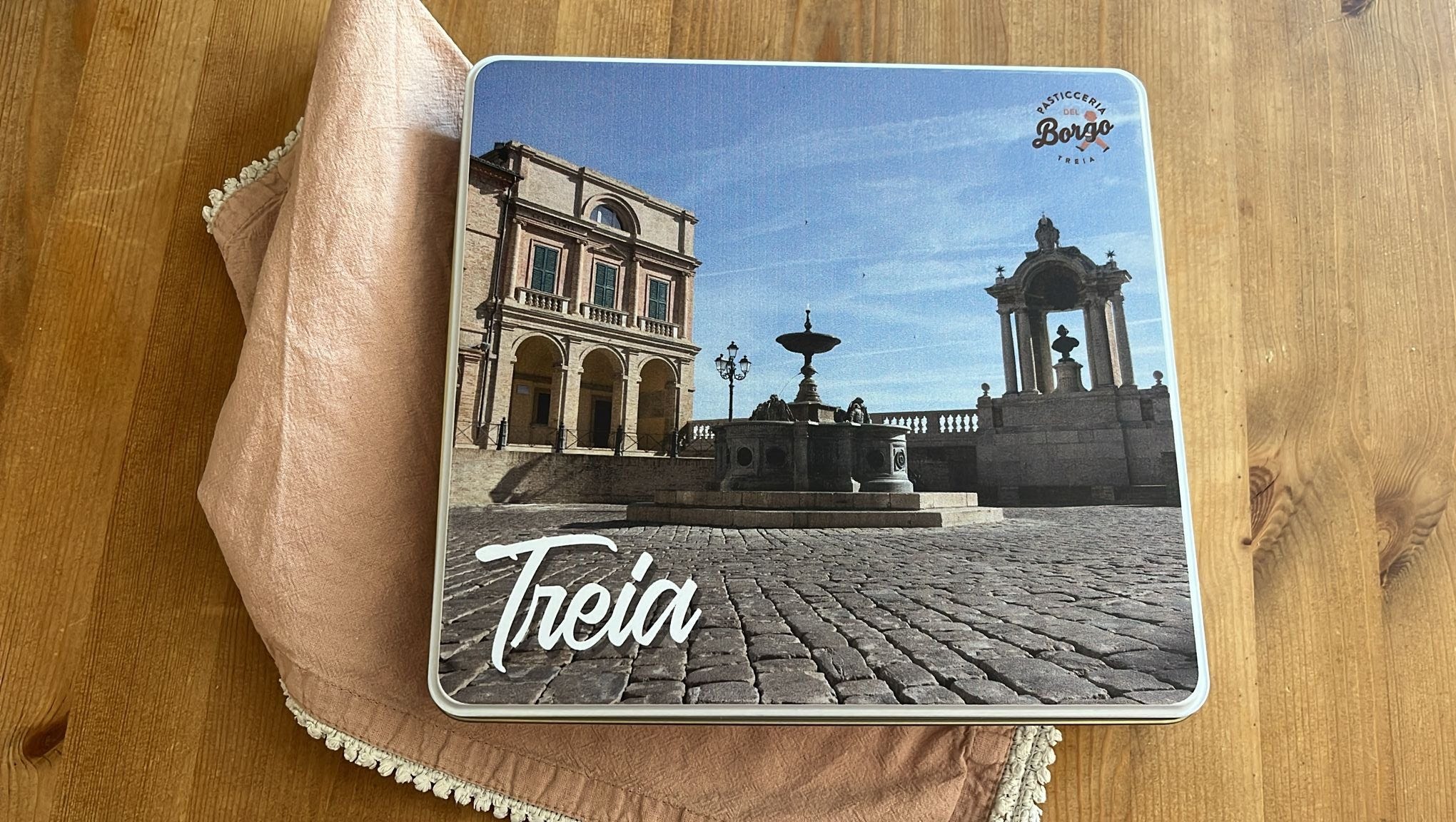
La pasticceria del Borgo is my favourite one: your tastebuds are in for a treat, and you’ll be met with warm atmosphere. If you’re lucky, you might also find cargiù, the large ricotta-filled ravioli I still dream about… although mostly it’s only prepared correctly in families to be honest.
Many restaurants serve seasonal dishes rooted in the territory, often featuring sheep’s cheese, legumes, and local herbs. No tourist traps here, and it’s truly delicious
Where to Stay
There are a few agriturismi and small B&Bs in and around Treia, many set in the hills with views of the valley. If you’re looking for full immersion, my personal recommendation would be to rent a car and choose one a little outside town.
However, if you prefer to stay in the heart of the village, look for a guesthouse near Piazza della Repubblica and you’ll certainly have an incredible experience as well.
Where to Go Next
Treia is perfectly placed for exploring the region. Form here, different options:
Head east to Macerata, a university town with open-air concerts and the iconic Sferisterio opera festival in summer.
Go south to San Severino Marche, my hometown, for a quieter walk through piazzas and cloisters.
Or take a day trip west into the Sibillini Mountains for a completely different feel: rugged landscapes, alpine air, and ancient legends.
For a mix of nature and coast, drive toward Monte Conero. It’s close enough to see from Treia, and just far enough to feel like another world.
Wherever you go next, remember to go slowly.
The beauty of Le Marche is not in ticking things off, but in letting the places and the people speak to you.
Ready to plan your trip to Le Marche?
Treia is just one example of the wonders the region of Le Marche has to offer.
And you know it by now: this isn’t a place to visit with a checklist. It’s a place you feel, slowly and fully.
If this sounds like your kind of travel, I’d love to help you shape a journey that fits your rhythm.
This summer, I’m offering for the first time a personalised travel consultation to help you discover Le Marche region in a way that’s thoughtful, authentic, and deeply enjoyable.
The package includes
a 1:1 call to understand your travel style, needs, and preferences
a custom itinerary for Le Marche (printable) with personalised recommendations for places to stay, eat, drink, and explore throughout Le Marche
a second call to walk you through it, with space for questions and adjustments
You’ll receive everything you need to travel at your own pace, without missing what truly matters.
If you have questions or you want to make sure this is a good match, leave me a comment, send me a DM or an email at info@timetobeitalian.com